A Reflection on Compassion, Restoration, and Our Redeemer
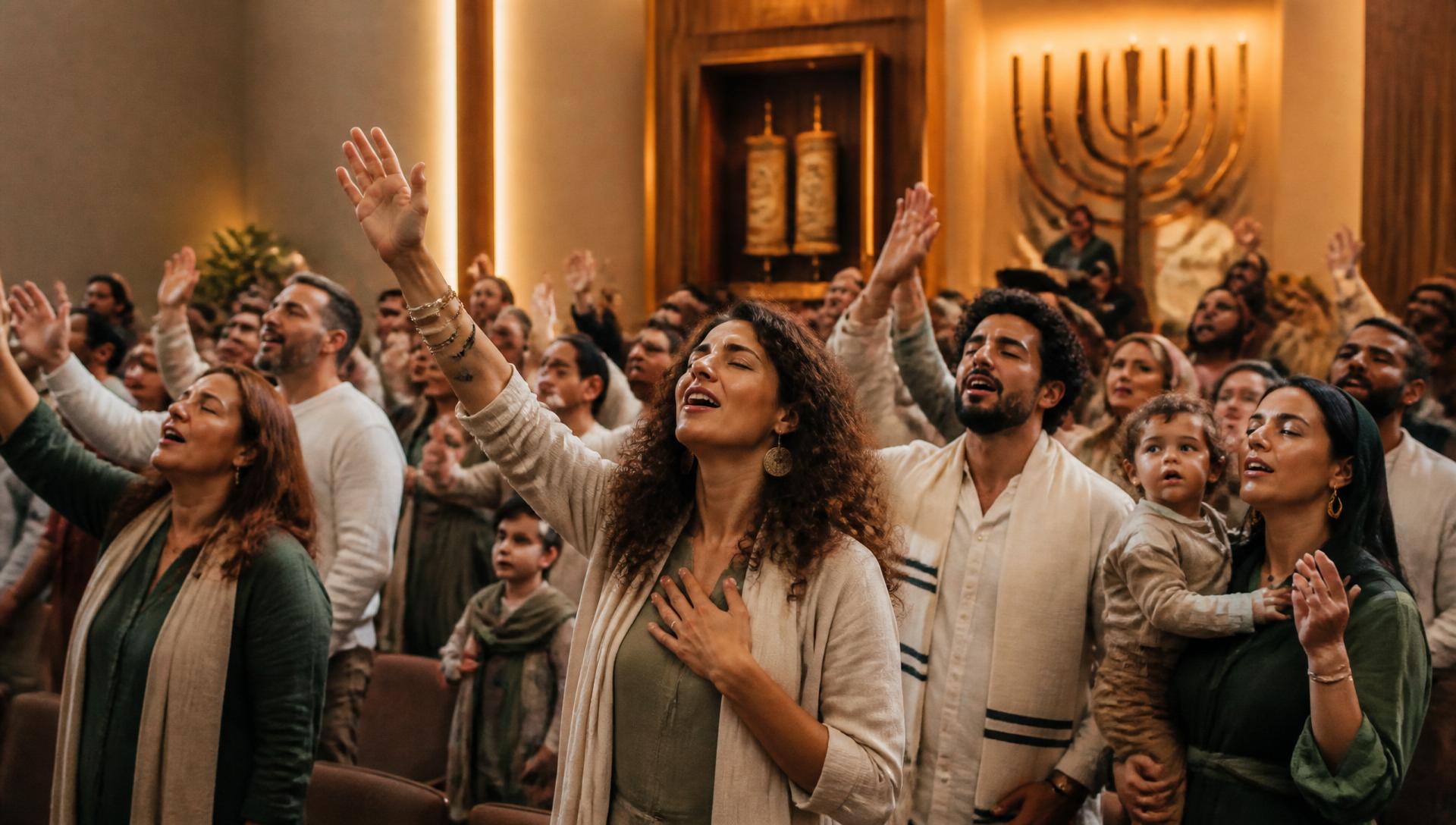
It is easy to worship and declare our faith when we are surrounded by believers in the sanctuary. But who are we when we walk out the doors? Does our behavior out in the world represent that we are actively preparing the way for the Messiah? True holiness is not merely what happens between you and God—holiness changes how we treat people.
The Mitzvot of Compassion A closer look at the commandments (mitzvot) in Deuteronomy 22 reveals that God is deeply concerned with how power is used and how we care for the vulnerable. These instructions are not just religious rules; they are a manual for displaying God's character.
Consider the level of detail God provides to ensure we watch out for one another:
The Captive and the Unloved: He protects the vulnerable captive woman and ensures a father cannot manipulate an inheritance out of favoritism.
The Lost and Fallen: If you see your neighbor's animal wandering, or a donkey that has fallen, you cannot claim it isn't your problem. You must help lift it up.
The Roof and the Cloak: You are instructed to build a parapet around your roof so no one falls off. If you take a poor man's cloak as collateral, you must return it before sundown so he doesn't freeze.
The Vulnerable: Pay the day laborer on time. Take care of the widow, become a father to the orphan, and leave gleanings in your field for those in need.
God is commissioning us: "Look after my kids." When we belong to Him, this is what His family is supposed to look like.
Overcoming the Urge to "Look the Other Way" In Deuteronomy 22, when speaking of a brother's lost animal, God commands that we cannot hide ourselves from it. The Hebrew expression hit'alem means to hide oneself or deliberately overlook something. How many times have we looked the other way rather than acknowledge that someone needs help? Sometimes sin isn't what we actively do; it is what we conveniently refuse to see.
God's answer is "surely restore it." The root Hebrew word for restore is shuv—the same root for teshuvah (returning to God). We return to God by caring for one another and participating in restoration.
"We want spectacular ministry, visions, and prophecies. But maybe God is asking: 'Did you start with the donkey in the ditch? Did you pay the person who worked for you? How are you treating the widow and the orphan?' Real spirituality is practical."
Rewiring Our Brains for Love There is a fascinating neurological principle at play here. Our brains become incredibly efficient at noticing what we repeatedly train them to notice. If we constantly tell ourselves "not my problem," we become experts at not seeing people.
The Torah continually trains the attention of Israel to look, notice, remember, help, and protect. God is forming a people that will reflexively look like the Messiah by training our brains to choose compassion over apathy.
Yeshua: The Walking Torah Yeshua (Jesus) perfectly embodied this heart of the Torah. He saw the people everyone else learned not to see:
When others told blind Bartimaeus to be quiet, Yeshua stopped.
When the outcast woman reached for His hem, He paused.
He saw Zacchaeus in the tree and called him by name.
He honored the weeping woman at His feet, despite the judgment of the room.
He told the disciples to let the little children come to Him.
Yeshua restored what had been lost. We must be careful not to become so legalistic and nitpicky that the Messiah could be standing right in front of us and we miss Him.
The Crimson Worm and the Tree Hidden in Deuteronomy 21 is a decree: "Cursed is he who hangs on a tree." Thousands of years before Roman crucifixion, the Torah anticipated the cross. Yeshua was rejected, mocked, and made a curse for us—not because He sinned, but because we did.
In Psalm 22, David prophesied the crucifixion in stunning detail, including Yeshua's cry, "My God, my God, why have you forsaken me?" Later in the Psalm, it says, "I am a worm and not a man." This refers to the crimson worm (Tola'at Shani). When this worm is ready to give birth, it attaches itself to the wood of a tree. As it dies, it releases a crimson fluid that covers its young and stains the wood. Three days later, the dead worm turns bright white.
Yeshua attached Himself to the tree, covering us with His blood. Three days later, He rose, conquering the curse, so that we might wear His robes of righteousness!
Your Past Does Not Write Your Ending Isaiah 54 offers a profound promise: "Do not fear, for you will not be ashamed... For your Maker is your husband, the Lord of hosts is His name; and your Redeemer is the Holy One of Israel."
Many of us carry shame, rejection, or the fear of looking foolish. But God says that your painful history is not your permanent identity. Your failures and trauma may be a chapter in your story, but they do not get to write the ending. Your Redeemer gets to choose the title of your book.
Questions for Reflection As we examine our hearts, consider these three questions this week:
What have I learned to walk past that God wants me to see? Is there someone fallen, wandering, or hurting that God is asking me to help restore?
What shame am I still carrying that my Redeemer is asking me to release?
If I truly believed the Messiah was coming, would anything about the way I am living need to change?